EN
EN



Superior Thermal Management for Continuous Industrial Power Stability
Precise temperature regulation under sustained load: how water-cooled diesel generators prevent thermal derating
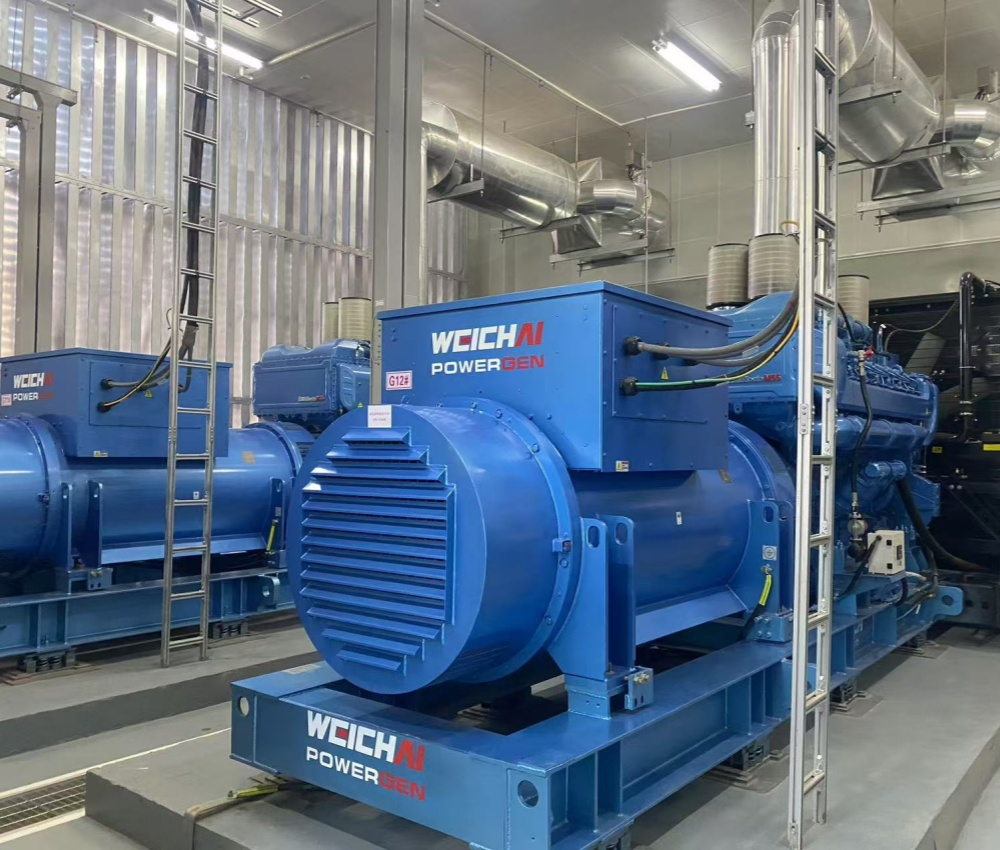
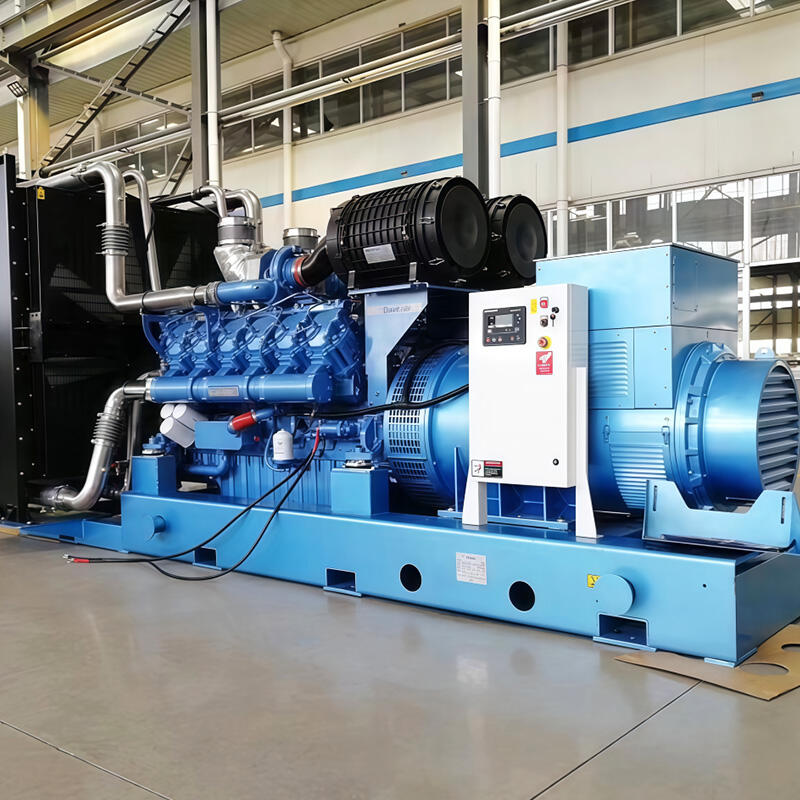
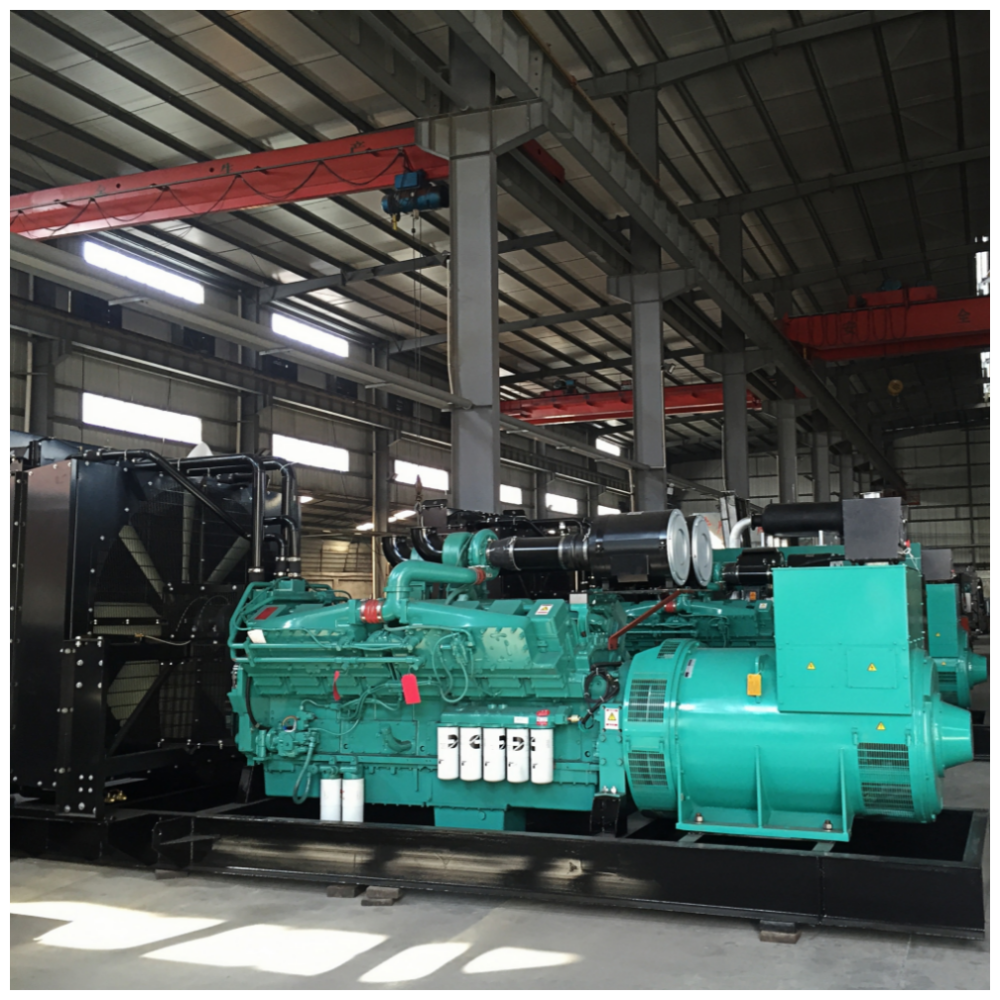
Diesel generators cooled by water keep things running smoothly when there's lots of demand over long periods, stopping the loss of power that happens when they get too hot. Water cooling works differently than air cooling because it actually pulls heat away from the engine block and combustion chamber using pressurized coolant. This means the temperature stays pretty much exactly where it needs to be, usually within about 2 degrees Celsius even when the generator is working at 90 percent or more continuously. Air cooled systems just aren't as good at this, often losing around 15 to 20 percent of their power when pushed similarly hard. The real advantage comes from how water cooling spreads out the heat evenly across all components, so no single part gets dangerously hot. This keeps the whole system efficient for longer and slows down wear on parts. Field tests show that water cooled generators can handle full power output for 30 to 50 percent more time than their air cooled counterparts during those really busy periods when electricity demand spikes.
Heat dissipation efficiency vs. air-cooled systems: quantifying cooling capacity gains in kW/°C
Water-cooled systems deliver fundamentally superior heat transfer performance, essential for industrial power stability. Water’s thermodynamic properties allow it to absorb roughly four times more heat per unit volume than air—enabling compact, high-capacity cooling architectures. Key comparative metrics:
| Metric | Water-Cooled Systems | Air-Cooled Systems | Advantage |
|---|---|---|---|
| Heat Transfer Coefficient | 50–100 W/m²°C | 10–20 W/m²°C | Up to 5× higher |
| Cooling Capacity Density | 500–800 kW/m³ | 50–100 kW/m³ | Up to 7× denser |
| Temperature Gradient | 8–12°C differential | 25–40°C differential | ~65% lower |
This translates to 2–3× greater heat dissipation per °C rise—supporting stable power delivery during sustained 500+ kW operations. The closed-loop system also reduces radiator size requirements by 40–60% and eliminates ambient-temperature–induced performance loss, making it ideal for high-heat industrial environments.
Higher Power Density and Fuel Efficiency in Heavy-Duty Applications
Achieving ¥500 kW output with stable efficiency: role of water-cooled diesel generator design
Water cooled diesel generators pack a lot more punch per cubic meter than their air cooled cousins, typically cranking out over 500 kW before the latter start losing steam or simply give up. The secret lies in those carefully designed water jackets and radiator systems that keep things running at just the right temperature. This means the combustion chambers can push harder without wasting fuel or overheating, even when pushed hard for hours on end. Real world tests show these machines hold around 95% of their maximum power even when temps hit 45 degrees Celsius outside, whereas most air cooled models struggle to stay above 85%. And let's not forget about space savings too. These units are built tight and tough, squeezing more power into smaller spaces which matters a ton for factories and utilities where every square meter counts.
Optimized diesel combustion and cooling synergy for peak-load fuel economy (g/kWh)
Precision cooling enables optimal cylinder temperatures (85–95°C), promoting complete combustion and reducing full-load fuel consumption to 195–210 g/kWh. Air-cooled systems, by comparison, frequently exceed 240 g/kWh under thermal stress due to incomplete burn and fluctuating chamber temperatures. This thermal-combustion synergy delivers measurable operational advantages:
| Efficiency Factor | Water-Cooled | Air-Cooled |
|---|---|---|
| Peak-load fuel economy | 195–210 g/kWh | 220–250 g/kWh |
| Output stability at 40°C+ | >98% rated capacity | ≤85% rated capacity |
| Maintenance frequency | 500-hour intervals | 250-hour intervals |
Uniform heat dissipation also curbs carbon deposit formation, extending service intervals and lowering total operating costs—particularly valuable in peak-shaving applications where fuel efficiency directly affects profitability.
Proven Reliability, Extended Lifespan, and Lower Lifetime Costs
10,000+ hour operational durability validated in utility-grade power plant deployments
Water cooled diesel generators have stood the test of time in industrial settings where they run non stop for thousands of hours at a stretch in big power plants. Their long life comes down to good heat control which stops parts from wearing out too fast due to constant heating and cooling cycles. These machines work reliably even when conditions get tough. We've seen them perform well at coastal locations where salt gets into everything and in deserts where temperatures regularly hit over 50 degrees Celsius. Some independent studies indicate that water cooled models need cylinder head replacements about 23 percent less often than their air cooled counterparts after running for around 8,000 hours. That means fewer unexpected breakdowns and lower maintenance bills for plant operators who rely on these generators day in day out.
Reduced maintenance frequency and TCO advantage over 10-year lifecycle
Integrated cooling designs can slash maintenance needs somewhere around 30 to 40 percent over ten years of operation. The simpler coolant pathways mean no more wrestling with complicated duct cleaning tasks. Plus, when heat spreads evenly across components, we see less wear and tear on critical parts like pistons, valves, and those pesky bearings. Major consulting firms in the power sector have run their numbers too, finding that these systems typically come out about 18% cheaper overall compared to traditional air cooling solutions. Real world experience backs this up as well. Many plant operators are seeing real money saved each year, sometimes pushing past fifteen grand annually for every 500 kW installation. Most of these savings come down to two main factors: oil changes last twice as long now (500 hours instead of just 250), and radiators don't need nearly as much attention anymore.
Critical Grid Support and Sustainable Integration in Modern Power Plants
When it comes to keeping the electrical grid stable, water cooled diesel generators are pretty much essential these days, especially with so many renewable sources being added to the mix at power plants across the country. These systems react about 30 to maybe even 50 percent quicker than their air cooled counterparts when there's a drop in frequency. That makes all the difference when dealing with those unpredictable moments when solar panels stop producing or wind turbines slow down. Most grids require backup power to kick in within just two seconds, something these generators handle effortlessly. The speed really matters too because without this quick response, we'd see voltage drops that can damage expensive machinery and disrupt manufacturing processes running on automated lines throughout factories everywhere.
These generators help make operations more sustainable by allowing greater use of renewables while still offering dependable backup power that doesn't mess with thermal or electrical stability. Unlike air cooled models which tend to lose performance over time, these can run non stop during those long periods when the grid needs extra support. This means combined cycle plants actually get about 15 to 20 percent more out of their renewable sources each year. They fill in the gaps when wind isn't blowing or sun isn't shining, making the whole system much more reliable despite the weather conditions.
This tech helps make infrastructure ready for what comes next. These days, many modern facilities are turning to water cooled diesel generators as a kind of rotating inertia source. Why? Because they help keep the grid stable when so much of it is now running on inverters instead of traditional power sources. The benefits go beyond just stability too. As we move towards completely renewable energy systems, these generators cut back on our dependence on those old fashioned carbon spewing peaker plants. And let's talk numbers for a second. A single 500 kW unit can slash CO2 emissions by around 220 tons each year compared to older models. That's pretty impressive when looking at the bigger picture of climate change mitigation efforts across industries.
FAQs
What are the main benefits of water-cooled diesel generators over air-cooled ones?
Water-cooled diesel generators provide precise temperature regulation, better heat dissipation, higher power density, improved fuel efficiency, and extended operational lifespan compared to air-cooled systems.
How does water cooling in diesel generators prevent thermal derating?
Water cooling efficiently removes heat from the engine block and combustion chamber, maintaining stable operational temperatures and preventing power losses that occur due to overheating.
How do water-cooled generators support grid stability?
Water-cooled generators respond faster to frequency drops, providing essential backup power to maintain grid stability and enabling the integration of renewable energy sources.
What is the impact of water-cooled diesel generators on maintenance costs?
The integrated cooling designs reduce maintenance frequency and lower total operating costs, offering a 30-40% reduction over ten years compared to air-cooled systems.
How do these generators contribute to sustainability and climate change mitigation?
Water-cooled diesel generators enable higher utilization of renewable sources and reduce dependency on older carbon-emitting peaker plants, contributing to reduced CO2 emissions annually.