EN
EN



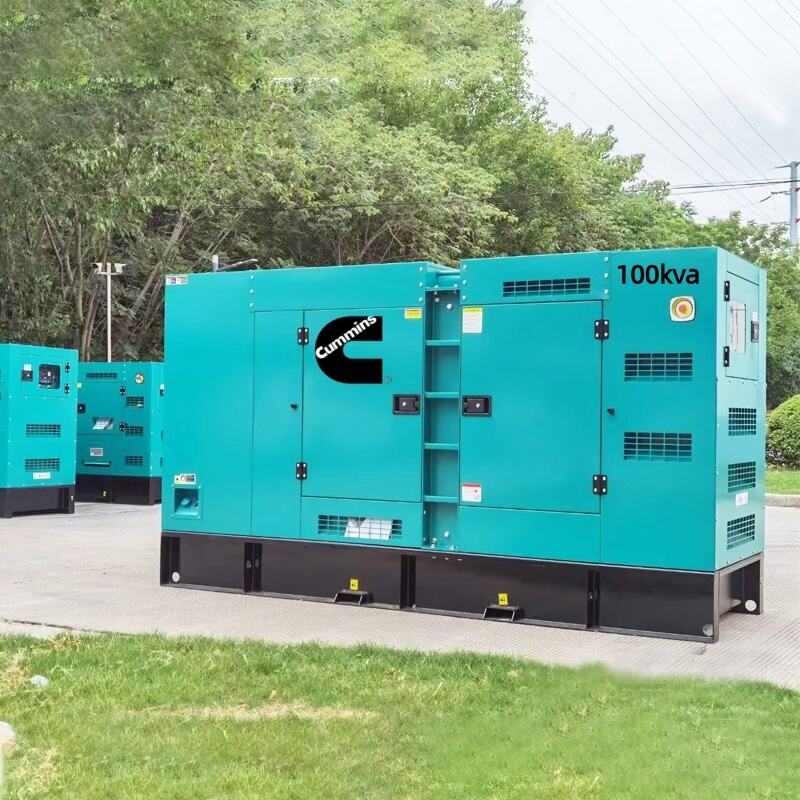
Acoustic Performance and Noise Control in Silent Diesel Generators
Understanding Noise Levels: Achieving <65 dB(A) at 1m for Urban and Campus Data Centers
Data centers located in areas where noise matters a lot, like city centers or university grounds, need to keep their operation sounds under 65 dB(A) when measured from one meter away. That level basically matches normal conversation volume, which meets what neighbors expect and follows regulations set by organizations such as the World Health Organization for living areas. Regular old diesel generators just won't cut it since they typically produce between 80 to 100 dB(A). Fortunately, newer quiet diesel models have been engineered to stay within those 65 dB limits thanks to special acoustic design features built right into them. These improvements mean operators don't have to worry about getting fined or having their operations limited if there's a long power outage situation.
Sound-Attenuated Enclosures and Advanced Damping Technologies
Silent diesel generators suppress noise at the source using three interdependent technologies:
- Acoustic canopies: Multi-layer steel/aluminum enclosures with mineral wool insulation absorb up to 90% of mechanical noise
- Dynamic vibration dampers: Rubber-isolated engine mounts and inertia blocks prevent structural resonance transmission
- Tuned exhaust mufflers: Reactive silencers attenuate low-frequency exhaust pulses by up to 30 dB
Together, these systems deliver consistent 60–75 dB(A) operation—a 40% reduction in perceived loudness versus conventional units—without sacrificing power density or thermal performance.
Compliance with International Standards
Certification against internationally recognized standards validates real-world acoustic behavior under load:
- ISO 3744 (2020) specifies hemispherical measurement methodology for accurate sound power level quantification
- ISO 8528-10 defines test protocols for acoustic performance across variable electrical loads
- Uptime Institute Tier IV requires ​75 dB(A) at property boundaries during continuous operation
Meeting these benchmarks ensures compliance with local ordinances—including EPA-enforced noise limits—and avoids penalties exceeding $50,000/month. Proactive acoustic validation during commissioning safeguards continuity of operations during grid failures.
Reliability, Automatic Transfer Switching, and Long-Term Runtime Assurance
High MTBF (>10,000 Hours) and NFPA 110 Type 10 Compliance in Mission-Critical Environments
Silent diesel generators deployed in data centers must sustain exceptional reliability—specifically, a Mean Time Between Failures (MTBF) exceeding 10,000 hours. This reflects design rigor: redundant subsystems, accelerated life-cycle testing, and embedded predictive maintenance capabilities. Equally critical is NFPA 110 Type 10 compliance, which mandates:
- Fuel system integrity supporting ​96-hour runtime
- Seismic-rated mounting and component anchoring
- Real-time self-diagnostics capable of anticipating faults before failure
Units meeting both criteria reduce unplanned outage risk by 83% compared to standard models (Ponemon Institute, 2023), directly enabling Uptime Institute Tier III/IV certification—where 99.995% availability is contractually enforced.
Seamless Power Transition: ATS Integration with <10-Second Latency in Tier III and Tier IV Facilities
Automatic Transfer Switches (ATS) serve as the linchpin of uninterrupted power continuity. High-performance ATS units detect utility loss within 2 milliseconds, initiate generator startup, and complete load transfer in under 10 seconds—well within the 5–8 minute buffer provided by typical UPS battery systems. This latency threshold prevents:
- Server shutdowns triggered by HVAC restart surges
- Data corruption during brownout conditions
- Equipment damage from phase imbalances or voltage sag
Tier IV facilities require this performance as a baseline; delays beyond 15 seconds may incur losses exceeding $740,000 per incident (Ponemon Institute, 2023). Modern ATS implementations incorporate synchro-check relays and closed-transition switching to eliminate micro-interruptions during grid reconnection.
Proper Sizing and Dynamic Load Handling for Data Center Power Profiles
DCP (Data Center Power) Rating vs. Standby/Prime: Why IEEE 1344-2022 Mandates 125% Continuous Load Margin
Regular standby or prime-rated generators simply won't cut it when it comes to powering data centers these days. That's where the new IEEE 1344-2022 standard steps in with its Data Center Power (DCP) rating requirement. According to this standard, certified generator units need to handle 125% of their normal load capacity all the time, not just for short bursts as older models do. This extra capacity makes sure everything keeps running smoothly even when there are sudden increases in IT loads plus the cooling systems kick in at the same time, preventing issues like voltage drops or overheating problems. Generators built to meet DCP standards come equipped with bigger windings, better cooling options whether air or liquid based, and stronger insulation materials compared to regular generators which start losing power efficiency after only about half an hour under heavy load conditions.
Managing Inrush Current: Supporting 200% Load Surge from UPS Recharge and HVAC Restart Within 30 Seconds
Data centers place serious strain on power systems when things happen all at once. Think about it this way: when backup power systems recharge while air conditioning chillers kick back online, we're looking at sudden load spikes that can double normal consumption in just half a minute. For silent diesel generators to handle these situations, they need to maintain rock solid frequency control within plus or minus 0.5 Hz and keep voltage levels consistent throughout. Getting there requires smart voltage regulators paired with governor systems that actually anticipate problems instead of waiting for them. These systems bypass standard delay protocols using predictive models based on real world data patterns. And let's not forget about UL 2200 certification which checks if generators can start big motors without issues. This matters because chillers typically pull six times their regular current during startup, so proper certification ensures these critical components get the reliable power they need to keep operations running smoothly.
Fuel Management for Extended 72+ Hour Silent Generator Operation
Effective fuel management is foundational to achieving reliable 72+ hour runtime during prolonged grid outages. It requires disciplined attention to fuel chemistry, storage integrity, and biological contamination control.
Diesel Fuel Quality and Stability: ASTM D975 and ISO 8528-5 Guidelines for Long-Term Storage
Diesel fuel degrades over time, threatening generator readiness. Industry standards define non-negotiable quality baselines:
- Sulfur content ​15 ppm (per ASTM D975) to prevent injector corrosion
- Cetane number ​40 (per ISO 8528-5) for dependable cold-start performance
- Oxidation stability sufficient to inhibit sediment and sludge formation
Fuel should be tested every six months for acid number, water content, and viscosity drift. When storage exceeds six months, stabilizers compliant with MIL-PRF-25017H are required to preserve fuel integrity and prevent particulate buildup that clogs filters and injectors.
Preventing Microbial Contamination and Ensuring Fuel Readiness with On-Site Filtration
“Diesel bugâ€â€”microbial colonies thriving at the fuel-water interface—can compromise filter life and combustion efficiency within weeks. Effective mitigation combines:
- Triple-stage filtration removing 99.9% of particles >3 microns
- Coalescing filters reducing emulsified water to ​0.01% volume
- EPA-registered biocides compatible with ultra-low-sulfur diesel (ULSD) additives
Automated fuel polishing systems circulate stored fuel bi-weekly to maintain homogeneity and remove contaminants. Routine ASTM D7462 microbial testing provides early warning before colony levels reach critical thresholds—ensuring fuel remains operationally ready when needed most.
Compliance with Data Center Safety, Certification, and Industry Standards
Achieving NFPA 110 Class X, Level 1 and Uptime Institute Tier IV Certification: Audit-Ready Requirements
Silent diesel generators for Tier III/IV data centers must satisfy dual certification frameworks:
- NFPA 110 Class X, Level 1 mandates fire-resistant construction, dual-fuel delivery paths, automatic transfer switching, and seismic resilience
- Uptime Institute Tier IV requires documented fault tolerance, concurrent maintainability, and annual third-party validation of 99.995% availability
Together, these certifications ensure infrastructure withstands regulatory audits while delivering sub-30-second failover during emergencies—all while remaining compliant with emissions, noise, and fuel safety regulations. Generators meeting both benchmarks provide auditable proof of reliability, a necessity where unplanned downtime carries verified costs exceeding $740,000 per incident (Ponemon Institute, 2023).
FAQ Section
Why is achieving less than 65 dB(A) important for diesel generators in urban data centers?
Keeping noise levels below 65 dB(A) is crucial to comply with regulations set by organizations like the World Health Organization. This makes sure the generator noise is at a level comparable to normal conversation, minimizing disturbance in urban environments.
How do sound-attenuated enclosures work in silent diesel generators?
Sound-attenuated enclosures work by incorporating multi-layer steel or aluminum with insulation materials that absorb up to 90% of mechanical noise, significantly reducing the audible output of diesel generators.
What are Automatic Transfer Switches (ATS) and their importance in data centers?
ATS units ensure continuous power by detecting utility loss, starting up the generator, and transferring the load in under 10 seconds, which is well within the buffer provided by typical UPS systems, crucial for preventing server shutdowns and data corruption.
What does the IEEE 1344-2022 standard mandate for data centers?
The IEEE 1344-2022 standard requires generators to handle 125% of their normal load capacity continuously, ensuring consistent operation during sudden IT load increases and cooling system activations.
Why is diesel fuel management important in silent generators?
Proper fuel management extends the operational readiness of generators, ensuring that even during prolonged outages, the fuel remains stable and free from contamination, guaranteeing reliable performance.
Table of Contents
- Acoustic Performance and Noise Control in Silent Diesel Generators
- Reliability, Automatic Transfer Switching, and Long-Term Runtime Assurance
- Proper Sizing and Dynamic Load Handling for Data Center Power Profiles
- Fuel Management for Extended 72+ Hour Silent Generator Operation
- Compliance with Data Center Safety, Certification, and Industry Standards
-
FAQ Section
- Why is achieving less than 65 dB(A) important for diesel generators in urban data centers?
- How do sound-attenuated enclosures work in silent diesel generators?
- What are Automatic Transfer Switches (ATS) and their importance in data centers?
- What does the IEEE 1344-2022 standard mandate for data centers?
- Why is diesel fuel management important in silent generators?